Thermosensitive medicine: a focus on the use, storage and transport of insulin

Diabetes is now considered a true pandemic by the WHO. The disease affects 415 million people worldwide, kills one person every six seconds and its progression is considerable. Insulin is an effective treatment that has evolved significantly in recent years, but it requires careful storage and transport precautions to ensure its efficacy.
Best practice for storing and transporting thermosensitive medications
How is insulin administered?
Insulin can be administered in three ways:
- Via subcutaneous injection: this is the most common method. It is done using syringes, reusable or disposable insulin pens (increasingly used because they are easy to use and ready to go), or an external subcutaneous insulin pump (a device worn on the belt, connected to a subcutaneous needle via a catheter).
- Via intravenously : this method of injection is mainly used by medical personnel in emergency situations.
- – Intraperitoneally: an insulin pump is implanted in the abdominal cavity.
How should you store and protect it?
There are several ways to store insulin depending on whether it has been opened or not:
- – Before opening, insulin should be stored between +2 °C and +8 °C until the expiration date indicated on the box.
- – After opening, insulin can be kept at room temperature (between +15 °C and +25 °C) for up to one month, as long as it is kept in its packaging, away from heat and light. However, even if it has not been fully used, insulin must be discarded after one month of opening.
In all cases, care must be taken to ensure that insulin does not freeze, as this will render it ineffective. It should not be stored against the walls of the refrigerator. Similarly, it should never be subjected to high temperatures to avoid altering its effectiveness.
What precautions should be taken?
- – Injection equipment is strictly personal. The needle used for injection via a syringe or insulin pen must be changed daily. In the case of an external subcutaneous insulin pump, it must be changed every three days at most.
- Be sure to note the opening date of the vial or insulin pen to respect the one-month storage period after opening.
- Inject insulin at room temperature: it is better absorbed by the body and the injection is more pleasant.
What is the best insulated solution for insulin during your travels?
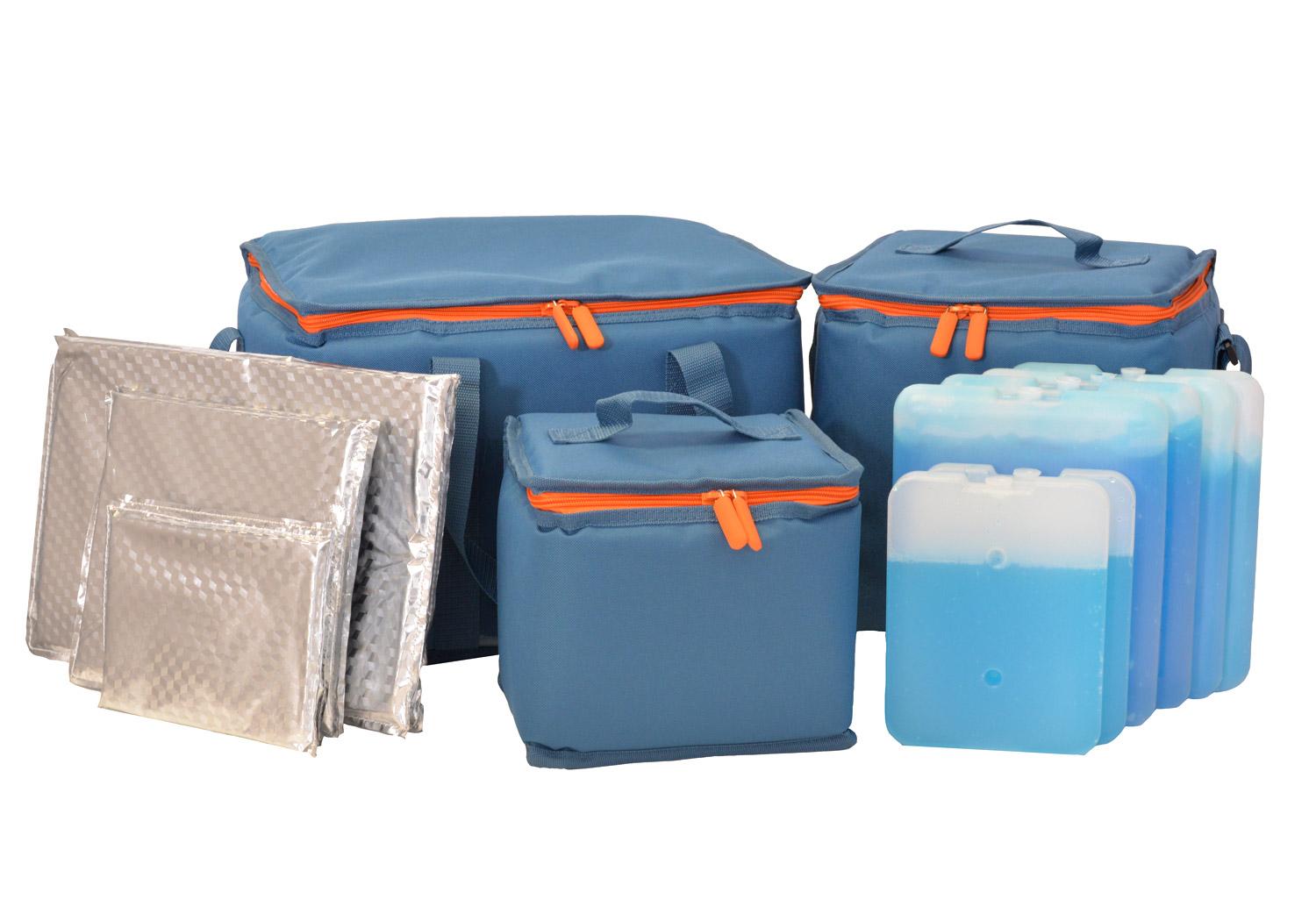
Regardless of your mode of transport and the season, always plan to carry insulin in an insulated bag to avoid sudden temperature changes. Vials and pens contain extremely low product doses that change temperature very quickly depending on the outside temperature they are exposed to. Using an insulated bag, or better yet, a refrigerated one, helps prevent temperature fluctuations and in the case of a refrigerated bag, keeps insulin at the desired temperature (+2/+8 °C or +15/+25 °C) for several hours or even days.
Are you looking for an insulated solution for transporting insulin or any other thermosensitive medication?
Contact our experts!