Driving Decarbonisation in the Pharmaceutical Cold Chain
Decarbonising the Pharmaceutical Cold Chain: How Can Environmental Performance and Drug Safety Go Hand in Hand?
For decades, the pharmaceutical cold chain has been built around two fundamental priorities: ensuring the integrity of temperature-sensitive medicines and complying with increasingly stringent regulatory requirements.
Today, a third imperative has emerged: sustainability.
The challenge is no longer to choose between safety, compliance and environmental performance, but to successfully achieve all three simultaneously.
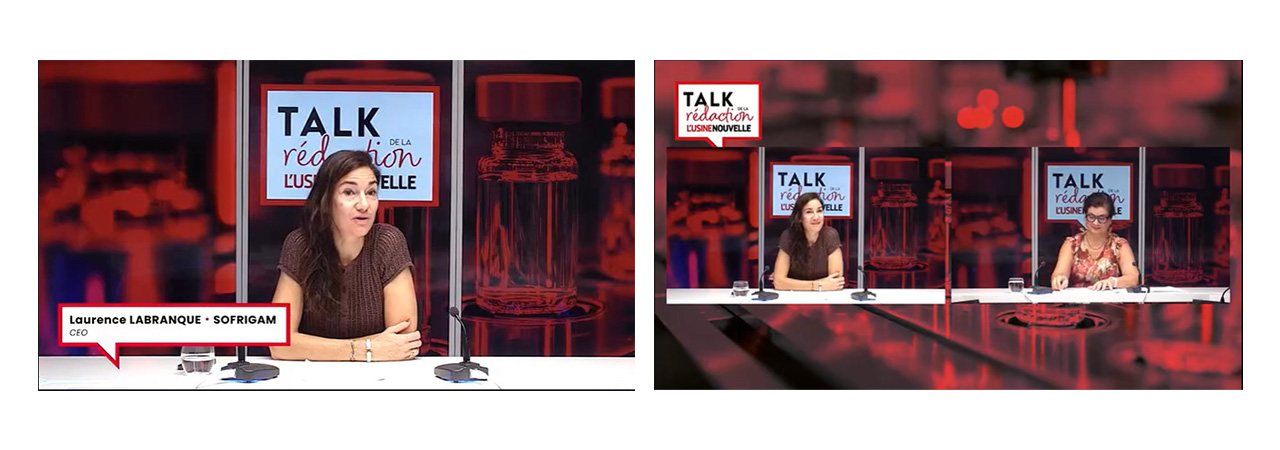
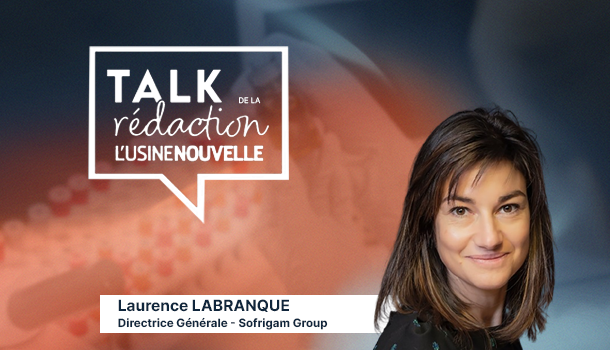
This is the vision shared by Laurence Labranque, Chief Executive Officer of SOFRIGAM, during the L’Usine Nouvelle webinar dedicated to the strategic transformation of the pharmaceutical industry.
Why Has Decarbonisation Become a Major Challenge for the Pharmaceutical Cold Chain?
Because temperature-sensitive healthcare products allow no compromise.
For more than 45 years, SOFRIGAM has remained committed to one unwavering priority: protecting the integrity of pharmaceutical products throughout their transportation.
Vaccines, biologics and other healthcare products must reach patients within their specified temperature range.
Decarbonisation can therefore only be pursued under one condition: maintaining uncompromising product safety.
How Can Environmental Challenges Be Addressed Without Compromising Logistics Performance?
The objective is not to oppose economic performance and environmental performance, but to reconcile them.
This ambition is embedded in a sustainable growth strategy that transforms traditional logistics models into more resource-efficient solutions while maintaining the highest standards of quality and performance.
Why Is the “Fit-for-Purpose” Approach a Powerful Decarbonisation Lever?
For many years, thermal packaging was designed to withstand the most demanding logistics scenarios.
Today, access to operational data, improved supply chain visibility and stronger collaboration between stakeholders make it possible to tailor packaging solutions much more precisely to the actual requirements of each shipment.
This fit-for-purpose approach means selecting the right solution for the right application. It represents a profound evolution in pharmaceutical cold chain management: rather than systematically overprotecting shipments, the objective is to deliver exactly the level of thermal performance required for each use case.
This approach helps reduce:
- the quantity of raw materials used;
- packaging weight;
- cooling requirements when logistics conditions are better controlled.
In air freight, reducing packaging weight directly contributes to lowering carbon emissions.
How Should End-of-Life Packaging Be Rethought?
The discussion extends far beyond recycling alone.
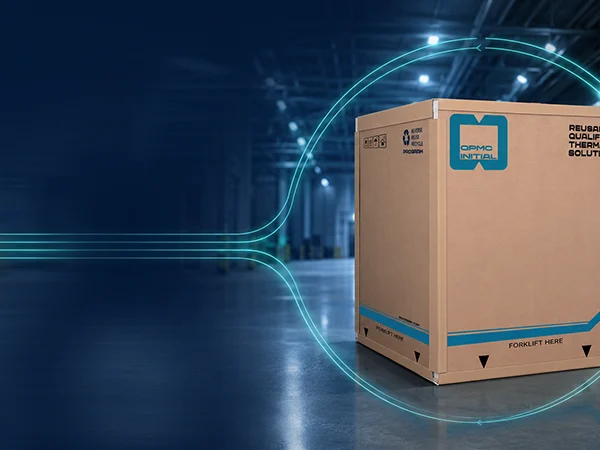
SOFRIGAM promotes a holistic approach to packaging, considering it not as a single-use product but as a combination of components that can each follow the most appropriate recovery pathway.
The 3R Programme directs each component according to its value potential:
- Reverse – returning high-value components for refurbishment and reuse;
- Reuse – local reuse whenever feasible;
- Recycle – recycling through the most appropriate available channels.
The objective is to transform future waste into a valuable resource.
Why Is Life Cycle Assessment Essential?
Every decarbonisation strategy begins with robust measurement.
Life Cycle Assessment (LCA) provides the foundation for informed decision-making. It evaluates the environmental impacts of packaging across its entire life cycle using a multi-criteria approach and identifies the most effective improvement opportunities.
Because the objective is not simply to reduce CO₂ emissions. A decision that appears beneficial according to one indicator may inadvertently shift environmental impacts elsewhere. LCA enables equivalent solutions to be compared objectively, supporting decisions based on scientific evidence rather than assumptions.
Why Is SOFRIGAM Participating in the ACT Step by Step Programme?
The transformations described by Laurence Labranque are not merely long-term ambitions.
They are already being translated into concrete actions within SOFRIGAM.
As part of this commitment, the company participates in the ACT Collective Programme, launched by Pacte PME and CorpoKarma, in partnership with Sanofi, and based on the ACT Step by Step methodology developed by ADEME.
The programme supports industrial SMEs and mid-sized companies in building structured decarbonisation roadmaps through five key stages:
- measuring their carbon footprint;
- defining decarbonisation objectives;
- identifying action levers;
- developing a strategic roadmap;
- implementing concrete actions.
For Laurence Labranque, the programme also represents a valuable opportunity to strengthen dialogue across the entire value chain.
“During the first session, we met Sanofi’s CSR Director and Director of Corporate Communications. They shared their long-term vision with us. These are discussions we rarely have in our day-to-day interactions with cold chain buyers and managers, where conversations are generally focused on much shorter time horizons.”
This collaborative approach fully reflects SOFRIGAM’s conviction that the decarbonisation of the pharmaceutical cold chain can only be achieved collectively, through the sharing of data, experience and innovation across the entire value chain.
Watch Laurence Labranque’s Full Presentation