The right solution for the right need.
The cold chain can no longer focus on thermal performance alone
Laurence Labranque, Chief Executive Officer of Sofrigam Group
As leading pharmaceutical companies require their suppliers to implement structured decarbonisation pathways aligned with net-zero targets, the very design of temperature-controlled transport solutions is being reconsidered.
In this interview, Laurence Labranque, Chief Executive Officer of Sofrigam, explains how an approach based on weight reduction, fit-for-purpose solutions and circularity can combine product integrity, total cost control and a reduced environmental footprint.
In a sector where biotherapies, vaccines and high-value medicines require flawless temperature control across supply chains that are increasingly consolidated and centralised around major third-party logistics providers, how can cold chain decarbonisation become a driver of performance rather than an additional constraint?
The pharmaceutical cold chain is becoming increasingly consolidated and centralised around major 3PL providers. Approaches such as Service Levels, Cold Corridors and Risk Assessment tools are being used to simplify flows and operations.
In this context, protecting the integrity of temperature-sensitive products while reducing their environmental footprint, particularly Scope 3 emissions, remains a major challenge.
At Sofrigam, we strongly believe that decarbonisation must never compromise patient safety. It requires precise control of thermodynamics: instead of adding more weight, we carefully size each solution according to the actual transport profile.
This fit-for-purpose approach can reduce packaging weight by up to 40% while maintaining thermal performance. Using less material means consuming fewer resources and generating fewer transport-related CO₂ emissions.
Sofrigam supports this transition by providing lighter solutions that are easier to deploy and better integrated into modern logistics infrastructures. Designed as genuine logistics tools, they turn thermal performance into a driver of decarbonisation and Total Cost of Ownership optimisation.
Sofrigam is participating in the ACT Collectif programme launched by Sanofi with Pacte PME and CorpoKarma, based on ADEME’s ACT Step-by-Step methodology. What strategic opportunities does this represent for your climate roadmap and your positioning with major customers?
We had already begun our CSR journey, completing our first carbon assessment in 2021.
The ACT Collectif programme provides a structured opportunity to accelerate and formalise our decarbonisation pathway, aligning it with international climate objectives and the goal of achieving carbon neutrality by 2050.
Beyond the robust methodology provided by ADEME, the programme allows us to engage directly with Sanofi’s CSR and Purchasing teams. It gives us a better understanding of their long-term vision, net-zero strategy and future expectations regarding strategic suppliers.
It also helps us anticipate developments in the pharmaceutical market, including the growth of specialised hubs and platforms, and align our own roadmap with those of major customers.
Taking part in this type of collective initiative strengthens our credibility as a partner capable of supporting the transformation of the cold chain, rather than simply supplying packaging solutions.
Your approach is based on three key convictions: “every kilogram matters”, “the right solution for the right need” and circularity through the 3R programme. How are these principles reflected in your solutions and your relationships with healthcare companies?
These three convictions form the foundation of our vision.
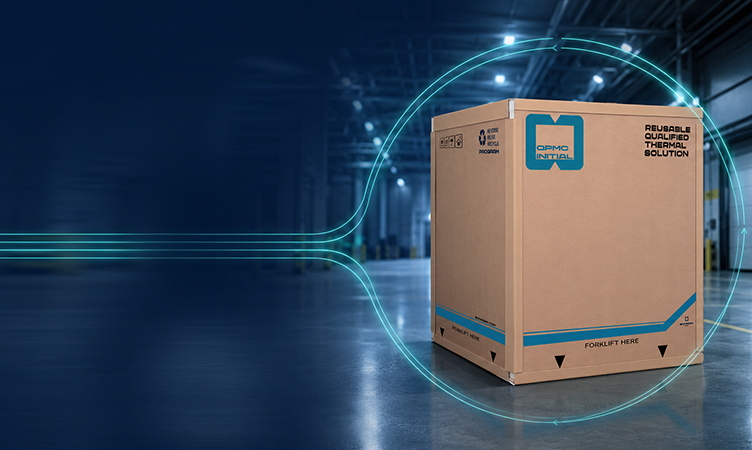
“Every kilogram matters”: we design without excess, optimising weight down to the nearest gram. Our pallet shippers are up to 40% lighter than standard solutions, directly reducing transport costs and emissions while maintaining robustness.
“The right solution for the right need”: not every shipment faces the same thermal risks or operational constraints. We reject systematic overqualification, which creates unnecessary complexity, additional costs and material waste. Instead, we precisely size each solution—including its insulation, cooling system and configuration—according to the actual transport profile.
Finally, we promote circularity through our 3R programme: Reverse, Reuse and Recycle. From the design stage, we consider how components can be reused or recovered at the end of their service life.
Through this programme, we have already collected more than 4,000 shippers, with 95.5% of their components given a second life and a significant reduction in the carbon footprint per unit.
These principles enable our customers to achieve their sustainability objectives without compromising compliance, traceability or product safety.
What practical benefits does the architecture of your PLS pallet shippers offer for large-volume pharmaceutical shipments?
Our PLS pallet shippers have a modular architecture, with Full and Light configurations, allowing the level of protection to be adjusted according to the transport duration, shipping method and expected handling stages.
High-performance polyurethane insulation limits temperature variations during critical phases, while large refrigerants improve thermal coverage and simplify preparation.
We qualify our solutions using scenarios that reflect actual transport conditions, rather than relying solely on standard profiles. Combined with the choice between water-based refrigerants and Phase Change Materials, depending on the logistical requirements, this approach optimises payload volume, streamlines logistics and improves Total Cost of Ownership control.
How does the Ready-To-Load service make a difference for certain types of flows?
Ready-To-Load consists of delivering the insulated packaging fully prepared, with the refrigerants preconditioned and positioned according to validated loading instructions.
This service provides particular value for critical shipments, centralised logistics strategies and sites without their own freezing infrastructure.
By removing preparation stages from the customer’s operations, it saves time and significantly reduces the risk of human error. The solution complies with GxP requirements and provides full traceability, ensuring cold chain security from the very first minute.
Together with Ater Métrologie, you combine climatic chamber testing with thermal simulation through a digital twin that includes tarmac radiation and solar irradiance. How does this dual approach secure your designs while avoiding the additional costs associated with overqualification?
Standard profiles have their value, but real shipments often face much more varied and demanding conditions.
Ater Métrologie conducts tests using a range of climatic chambers capable of reproducing different combinations of temperature and humidity, providing a clear understanding of system limits and safety margins.
At the same time, we develop a digital twin of the shipping system to simulate its behaviour under different climatic profiles. This includes the effects of solar radiation during periods of exposure on the airport tarmac.
This hybrid approach allows us to optimise designs at an early stage, compare different solutions, including those from different suppliers—and estimate thermal autonomy before launching long and costly testing programmes.
It enables our customers to follow a structured methodology adapted to their level of technical expertise, while ensuring that the validated performance reflects real operational conditions.
ISO 9001, ISTA and CERTICOLD Pharma certifications, together with a COFRAC-accredited calibration chain, further strengthen the reliability of this approach.
Sofrigam supports eight of the world’s ten largest pharmaceutical companies, achieves an OTIF rate of over 98% and protects more than four billion temperature-sensitive products every year. How does your integrated model, combining thermal engineering, metrology and agile production—allow you to act as a strategic partner in the transformation of their supply chains?
Our model is based on end-to-end control of the value chain, from thermal engineering and integrated production to qualification and associated services.
This integration gives us agility and responsiveness. We can quickly co-design customised solutions when a requirement cannot be met by our standard range, while maintaining quality and continuity of supply.
We develop solutions that respond to changes in the distribution models designed by logistics providers and their dedicated healthcare infrastructures, including Cold Corridors, hubs and specialised platforms.
By combining thermal performance, operational simplicity and circularity, we help our customers make their flows more reliable, better controlled and more efficient while supporting progress towards their decarbonisation objectives.
What message would you give healthcare companies about the future of their temperature-sensitive supply chains?
The cold chain can no longer be limited to maintaining a temperature. It must now become more precise, more responsible and more resilient.
Companies that successfully combine thermal performance, operational simplicity and circularity will gain a lasting advantage.
This requires moving away from the systematic addition of more material and adopting a fit-for-purpose approach, supported by partners with end-to-end expertise in thermodynamics.
By reducing weight, adapting solutions and extending their service life, we can move towards our decarbonisation objectives without ever compromising patient safety or regulatory compliance.
According to ActuLabo, “500 Key Players Shaping the French Pharmaceutical Industry”, published in July 2026.
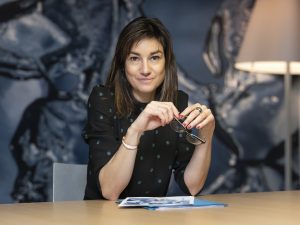
Portrait Laurence Labranque